A fresh and insightful perspective to many of today's issues, such as: current events, politics, health related topics, economics, relationships, and principles for daily living. These topics are dedicated to exposing you to relevant information that affects you, to encourage you to think critically about that information, and to encourage you to make sound and reasonable decisions that will benefit you and the ones you love. Enjoy the videos and posts, visit when you can and live well!

Wednesday, May 30, 2007

Facing your Fears: How to Deal with People or Things that Annoy You or Cause You to Stumble

Every one of us has encountered hurt, discouragement and disappointment at some point in our lives. But what do you do when that proverbial “monkey-on-your-back” is sometimes a repeat occurrence? You fight it, and it comes back to haunt you. The addiction, the lust, the habit, the fear, and the insecurity that always find you; it may leave you for a moment but it always knows where you live. Jesus spoke about this same issue. He said in Luke 11:24-26 “When an unclean spirit goes out of a man, he goes through dry places, seeking rest; and finding none, he says, I will return to my house from which I came. And when he comes, he finds it swept and put in order. Then he goes and takes with him seven other spirits more wicked than himself, and they enter and dwell there; and the last state of that man is worse than the first.” That unclean spirit could be the “monkey-on-your-back.” Well these types of stumbling blocks, problems or troubles are not unique to any one person, they are just apart of life. Jesus said in John 16:33 “These things I have spoken to you, that in Me you may have peace. In the world you will have tribulation; but be of good cheer, I have overcome the world.” Zechariah 4:6 further teaches us that “Not by might nor by power, but by My Spirit,’ says the LORD of hosts.” So from these two Scriptures we can conclude that adversity will come, but we can overcome it with our faith in God’s power. There are many Bible examples that substantiate this claim, so let’s investigate these short synopses, and apply the principles involved in these stories into our own lives.


Abraham


Childless Abraham was promised by God that he would be called the Father of many nations through his male child (Genesis 17:5). The fulfillment of this prophecy took a long time to fulfill (more than 20 years); Sarah, his wife, laughed at the promise (Genesis 18:12-13). When the promise was finally fulfilled, Abraham was commanded to kill his promised child (Genesis 22). What do you do when you’ve waited so long for the fulfillment of your hearts desire to come, only to have it taken from you? You feel like you take three steps forward and get knocked back five. You’re tempted to believe that everytime something good happens to you, bad is sure to follow. These are the times when you have to believe that the promises of God are in Him yes and Amen (2 Corinthians 1:20). The blessings of God make you rich, and they add no sorrow with it (Proverbs 10:22). You have to know in you heart that God is ONLY the author of good in your life, not evil (Jeremiah 29:11; John 10:10; 1 Corinthians 14:33). Hold on to God’s promises; remind Him of His promises to you (Isaiah 43:26). Do your part in the natural and let God do His part in the supernatural.


Joseph


God gave Joseph a dream that he would rule over his older brothers one day. Joseph prematurely revealed this dream to his older brothers; they despised it and threw him in a ditch. The brothers went home and told their father that Joseph was killed. Joseph didn’t die, but went to Egypt and eventually became the second in command under Pharoah. Because of his political influence and authority, Joseph was able to ration enough food to sustain the lives of his brothers and the entire nation of Israel through the famine. Joseph received a sure word of prophecy from God, and had no choice but to follow it. What do you do when you are ostracized for your beliefs, dreams or passions? Do you talk about what’s in your heart? A pregnant woman talks about her baby (that which is on the inside of her) during the pregnancy. What assignment/passion/dream from God is in you that you are pursuing? What are you doing to bring that to full fruition?


Jesus


He came to the earth to eventually be separated from the Father in order to die for the sins of the world. He asked Father God if His plan could be done another way; nevertheless, He obeyed Father God’s desire. Hebrews 12:2 says “looking unto Jesus, the author and finisher of our faith, who for the joy that was set before Him endured the cross, despising the shame, and has sat down at the right hand of the throne of God.” Although there was pain and suffering involved, for the greater good of humanity and with His faith firmly founded in the Father God’s will, Jesus sacrificed Himself for us. Jesus said that He could have called a legion of angels to deliver Him (Matthew 26:53). But He said that His meat (main purpose) was to do the will of Him who sent Him (John 4:34). What is God asking you to be willing to sacrifice for the sake of what’s best for you, your children, friends or family? Obeying may not be fun, but it brings a blessing (Isaiah 1:19-20).


David


The young king who caused a beautiful young woman (Bathsheba) to commit adultery with him, impregnated her, and had her husband killed (2 Samuel 11). As a result of this, evil never left his house. The newborn baby he had with Bathsheba died (2 Samuel 12) and his son, Solomon, became an idolatrous and backslidden king (1 Kings 11:1-4). Are you willing to allow the examples of history to be the warnings for your own actions today? (1 John 2:15-17). We’re all faced with temptations and with it, there is a way of escape in every situation (1 Corinthians 10:13). Let’s use proactive measures to not allow ourselves to be caught in uncompromising circumstances. A positive characteristic of David is that God said that David was a man after His heart (1 Kings 15:4). Even though he did do wrong, he showed genuine contrition (Psalms 51:4), and purposed in his heart to follow after God. Are you quick to acknowledge your faults to God and move forward with Him? If it’s a repeat offense, repeat the repentance. Notice that David’s heart was right before God, not all of his actions.


Paul


The Apostle Paul was originally named Saul of Tarsus. As a religious student under Rabbi Gamaliel (Acts 22:3), Saul was very skilled in the religious traditions of his day. Saul killed and persecuted Christians before his historical conversion to Christianity on the road to Damascus (Acts 9). As Paul later became an established Apostle in the Book of Acts, he came face-to-face with the same system he had once advanced and used as a weapon against the same message and movement he was promoting as an Apostle. He had to face his past. Are you willing to be teachable? Are you humble enough to admit and to correct your erroneous ways in order to move forward with God’s plan for your life? Maybe that doctrine you believe isn’t 100% correct. Maybe that relationship isn’t all that you think it is. Maybe that business deal or job isn’t as secure as you think it might be. Are you willing to reassess some of your priorities and readjust them?


Hosea


His marriage and life as a prophet manifested the relationship that God had with the continually unfaithful children of Israel. Hosea married Gomer only to discover that she was a prostitute. Though separation followed, Hosea’s love (like God’s love for His people) persisted and reconciliation eventually ensued. Sometimes we have to do things that we may not initially want to do or understand in order for God’s purposes to be accomplished in the earth. Would you be willing to suffer humiliation and be willing to forgive others, like Jesus and Hosea did, for the sake of fulfilling the purposes of God?


In all of these examples, we see how people were strengthened to overcome adversity for God’s desired purpose. Many times, we are faced with situations that can be characterized as painful, humiliating, embarrassing or degrading. But if we can gain some insight and revelation from these Bible stories, I believe that we can all overcome the struggles that we have. We may never suffer anything to the degree that these men did, but we can still use the principles in which they walked and gained victory to produce victory in our own lives. Principles are laws, like gravity. Gravity doesn’t care if you are in Africa, Canada, or Japan. If you jump off of a building, you will immediately fall to the ground and bust your head open. So use the principles, they work. The examples were given to us so that we can know the result of a certain action without experiencing the pain associated with it. Remember that! There are two ways to learn: through someone else’s example, or trial and error. We as adults and parents must stop perpetuating the same mistakes generation after generation. We need to set the next generation ahead of where we started. We must raise the bar and overcome the obstacles we face, walk in victory, and be a blessing. Review the stories in this article and see yourself and the situations that you encounter in them. How did the Bible heroes overcome adversity, weakness and struggles? That’s what you’re supposed to do, overcome. Don’t reinvent the wheel. Go and be the overcomer that God created you to be (1 John 5:4). You’re a victor, not a victim. Live well!


Thursday, May 24, 2007

How the Media Thinks for You Part 4: Watching the News with an Adverbial Perspective

In English class, we learned that an adverb was the part of speech that modifies a verb, adjective, or another adverb. Many times they are words that end in (ly), for example softly, but they always answered the questions: (who? what? where? when? how? why?). For the sake of this article I will call these words, the “Adverbial Perspective” (AP). Have you ever played the game Clue? If you answer these questions (AP) you can solve and explain the mystery of the crime. Questions prompt the issuance of information, and since we don’t want to be reactive and only receive information blindly, we will take a few moments to see how these few questions could possibly change our perception and perspective about many things, as well as how we receive information. Ask these questions (AP) to find out the motive for the News that is being presented, or any presentation for that matter. Most times, the news is just entertaining you with shallow news filler stories. They keep your attention so that the networks can continue to justify charging advertisers exorbitant sums of money, because they have an audience watching their programs. Everything has a motive; don’t be afraid to question things. Question everything: the existence of God, authority, current events, and everything you see. Questioning is a form of learning. People who are offended in genuine questioning have an ulterior motive, so you must make everything transparent through your inquisitive nature. The adverbial perspective (AP) will help us do that.


We are talking about following the News media. But you will be able to take this information and these questioning strategies (AP) into your job, your church, family matters, current events, and you will be able to discern ulterior motives in every situation you face. This is practical and insightful information that can help you to better understand the world in which we live, so that you can make better decisions concerning any situation for you and your family. Remember, I am going to give you principles in the examples, so don’t miss the big picture. Follow the principle (the principle of asking the questions of the AP), and then take the principle and apply it to your world.

Who?

In the great television and book suspense stories (Whodunits), we’re always intrigued with “Who” the guilty party is. Whenever someone is involved in a situation, one of the first questions people ask is, “Who did it?” Answering the “Who” question will let you know who your friend or enemy is. “Who” are the big donors and corporations that financially support political issues, candidates and organizations that are against your beliefs? “Who” are the high priced lawyers and lobbyists that influence the politicians? “Who” are the high level executives that finance and promote negative music and television programming that is against your standards? These are your enemies. If you want to go even deeper than that (spiritually), “Who” influences them? Ask yourself the “Who” question when the news is trying to shove someone down your throat: a celebrity or an athlete who has no credibility is instantly an authority on world issues; political candidates are suddenly qualified to run cities, states and countries because they can raise a lot of money. “Who” are these people? “Who” is behind these people?

What?

This is basically an interrogative word used to find the true nature or identity of something, or the sum of its characteristics. Answer “What” and you will know “What” it is, and “What” happened. “What” is a close connection with “Why,” and it will help to make sense of the thoughts of those involved. “What” are they doing? “What” is the purpose of the media’s silence of the Bush Administration pushing the Security and Prosperity Partnership (S.P.P.), the North America version of the European Union (EU)? “What” is the purpose of it? “What” is the purpose of making a European Union, or a Pan-African Union, or an Asian Union? Ask “What” to find the true nature or identity of a person, place, or thing. Another example you may see in the news is a decrease in crime statistics. Lower crime is better, but a lot of times, the way it is reported is very misleading. Cumulative crime rates of certain types of crimes can truthfully and statistically be lowered by the increase of another crime. Do you understand? If one type of crime (murder or thefts) stays the same or increases slightly, and another type of crime (traffic violations) increases 100 fold, then in the cumulative percentage of crime, thefts and murders seem to be much less. It’s “sleight-of-hand”; don’t fall for this. Ask the question “What.”

Where?

This word determines location. If you answer the “Where” question, it may help to confirm or to refute some of the other questions, like “why” or “how.” I remember the movie a “Few Good Men” with Jack Nicholson, Tom Cruise and Demi Moore. In the movie, there were two soldiers that were accused of following an unlawful order from a superior officer. The prosecutor went after one of the accused soldiers and made him (the soldier) confess that he (the soldier) didn’t actually hear the commanding officer give the unlawful order, because he (the soldier) was late arriving. This seemingly minor error in location was part of the reason the two soldiers were found guilty. Details are so important! That soldier wasn’t even “Where” the order was given. So find out the “Where” and make the picture clearer. Also, listen to your children explain how something broke or is missing in the house. If you think they are hiding something, ask them to repeat the story again. Pinpoint the location!

When?


This word determines time. Knowing “When” something happened can help you to develop a timeline. Putting events in chronological order can help one to make sense of a matter. In the movie “Premonition,” with Sandra Bullock and Nia Long, Linda (played by Bullock) created a timeline of events of things she saw. This helped her to decipher all of the things that were going on around her, and she eventually made sense of her situation. If you answer the “When” question, it may help to bring order to the circumstances that face you.

How?


This word leads us to the answer of the manner or the reasoning of the scenario and/or sequence of events. If you answer the “How” question, you will begin to make sense of the situation. The mechanics of the way things were done will become clearer. Have you ever done something or had something happen to you or around you, and you didn’t understand it? Then when you learned about the science of it, you said, “Oh now I understand.” For example, when we were children, we were so amazed that a baby could be in a mommy’s tummy. But once we got older and learned “How” the baby actually got in there, we could better appreciate love, intimacy, conception, child development and birth.

Why?


This word answers the motive question. Sometimes knowing “Why” something happened is just as important as what happened because the “Why” may help to prevent or explain a future occurrence. If you answer the “Why” question, it may help to confirm or to refute some of the other questions, like “what” or “how.” For example, let’s look at the tragedy of 9-11. We can use other examples, but for the sake of this article we’ll deal with two issues. “Why” was the steel from the demolished World Trade Center not allowed to be scrutinized by investigators before it was all quickly shipped overseas? Isn’t a crime scene supposed to be examined thoroughly before any of the contents are allowed to be removed from the scene? People who tamper with a crime scene and the evidence usually get punished severely. Am I being consistent with standard protocol? Am I a conspiracy theorist for asking a question? I’m asking, not accusing. Don’t fall into their trap to label and demonize people who question; that’s one of their tactics to neutralize independent thought. Here’s another 9-11 question: “Why” was there no airplane fuselage, seats, luggage or airplane debris at the Pentagon when they said that an airplane crashed into it? There was none of these items on the lawn and there was none inside of the building. But surveillance cameras that filmed the incident from nearby establishments were seized and never released to the public. Interesting, huh? We were told that it happened and that the plane vaporized from the heat. Isn’t that ridiculous? It sounds like a fairy tale, and we live happily ever after. (I’m digressing again.) I’m only teaching you how to question things and make sense of things. Folks, the official 9-11 story doesn’t even make natural sense. So don’t believe it or anything else these people tell you. Question everything!


I want you to question everything and you should encourage your children, friends, co-workers, fellow parishioners and family members to do the same. Katie Couric, the financial gurus on Wall Street, Barak Obama, George Bush and Hillary Clinton aren’t going to encourage you to question and to challenge them. They go to the closed circuit meetings where they answer scripted, softball questions asked by people who are (sometimes) on their staff. But now you have some short, but powerful principles in action that you can use to better understand situations that you may have previously taken for granted. Practice these principles on your job; ask your boss “Why” the company lost revenues in a certain department? “How” is this new software going to increase productivity? Ask your pastor “Where” does the Bible teach a specific doctrine that he/she espouses? I’m not trying to encourage you to be unruly. Use tact when dealing with people, but don’t be a slave that just follows orders/rules blindly. Even Jesus answered the sincere and genuine questions. Encourage your kids to ask you “Why” you discipline them. Truth always dispels a lie; and right information always dispels ignorance. Remember that! Don’t feel uncomfortable if you don’t understand or know something. Ask questions and get informed. Live well!

Tuesday, May 22, 2007

Being Filled with the Spirit

Many Bible teachings and doctrines have gone through much scrutiny and testing through the centuries. One of which is the “infilling,” “baptism,” or “being filled” with the Holy Spirit or Holy Ghost. This can become a very exhaustive topic, but I’m going to keep it short and simple. I will present you with the Word on the matter, and then you can accept it, reject it, or further study the matter. A lot of false and misleading teachings exist in many of today’s Church’s; or the teaching is absent all together about this topic on which Jesus expressly admonished His disciples and us as well. Let’s see what the Word of God says about the subject, and remember Romans 3:4 says “Let God be true and every man a liar.” Regardless of what our Church leaders believe or what you and I believe, we must follow the Word only. My contention, in line with the Word of God, is that the “infilling,” “baptism,” or “being filled” with the Holy Spirit is a New Testament experience that has been very much ignored, but is still for ALL 21st century Christians.

Let us begin to dispel some myths about this experience with the truth of the Word of God.

Speaking in tongues is a gift that passed away with the Apostles in the Book of Acts. This is found nowhere in Scripture, in fact, the Bible says the exact opposite. Acts 2:39 says “For the promise [of the Holy Spirit] is to you and to your children, and to all who are afar off, as many as the Lord our God will call.” If you read the entire second chapter of Acts, the day of Pentecost and the fulfillment of Joel 2 from the Old Testament came to pass. The power from on high came as Jesus foretold in Luke 24:49. If you have been called by God to salvation (you’re a born again believer in Jesus Christ), then the infilling is for you. The people in the Upper Room who got filled were already saved according to John 20:22, so this spiritual experience wasn’t the new birth, it was an experience subsequent to salvation. John 20:22 Jesus told the disciples to “Receive the Holy Ghost.” This wasn’t an eventual receiving of the Holy Spirit, it was instantaneous. If I throw a ball at you and I yell, “Catch!” When do you catch the ball? You catch it when I throw it. The same thing goes with the account in John 20:22; they received the indwelling of the Holy Spirit in John 20:22, and the infilling came in Acts 2. The Holy Spirit (Indwelling) baptizes a believer into the Body of Christ (1 Corinthians 6:19, Titus 3:5, 1 Corinthians 12:13). Jesus (Infilling) baptizes believers with the Holy Spirit (Matthew 3:11, Acts 2). In Scripture, wherever water baptism occurred, Christians were submerged in water by other Christians. There is no Scriptural account of babies being baptized or young children being baptized to join a Church or to “get right with God.” Water baptism is an outward display or symbol, of an inward transformation. In other words, you don’t get baptized to become a Christian; you get baptized because you are already a Christian.

Tongues is a gift only for the select few, everyone has there own gift from God. There is truth to this, but it is also misleading. There are actually two types of “Tongues”: the ministry gift to edify the body of believers (1 Corinthians 12:7-11, 30), and the personal prayer language (1 Corinthians 14:2 & 14, Romans 8:26 and Jude 20). In 1 Corinthians 12, we see a ministry gift being mentioned which entails an unknown tongue (to the speaker) being publicly spoken, accompanied with an interpretation in the audience’s known language. It’s actually the equivalent of prophecy. This is a gift that God will give to certain people as He sees fit. In 1 Corinthians 14, Romans 8:26 and Jude 20, we see another gift which is made available to all believers, a personal prayer language (speaking in tongues). Respectively, these Scriptures teach us that a Christian’s spirit is speaking directly to God; one can pray about weaknesses and situations unknown to the praying Christian; a Christian can build up the strength of his/her spirit.

Speaking in tongues is of the devil. If you sincerely and from your heart ask God for a gift, do you really believe that God will allow the devil to give you a counterfeit? (Luke 11:11-13) God knows our hearts and if we are truly seeking Him, you won’t be led astray. Read Acts 10, God sent Peter to a sinner, Cornelius, to help him because God saw that Cornelius’ heart was right before Him. If your heart is right, you CAN’T be deceived. Remember, you can be wrong about something without being deceived. You can have wrong thinking and have a good heart. But deception is the work of the enemy.

Speaking in tongues is a bunch of gibberish that fanatical Christians do. All of that isn’t necessary. People get off course and think that speaking in tongues is being filled with the Holy Spirit. Speaking in tongues isn’t being filled with the Holy Spirit; it’s the initial evidence that the believer has been filled with the Holy Spirit. But just like a car, you can run your tank low and need to get re-filled. Ephesians 5:18 talks about “Being filled with the Spirit” or “being filled” continually. If this experience isn’t necessary, then why didn’t Jesus allow the disciples to carry out the Great Commission (Matthew 28:19) without it (Luke 24:49)? The fact is that it is very necessary. It is the anointing that God left for the Church to empower us for service. (Acts 10:38)

If you don’t speak in tongues you aren’t a Christian. A few sects of Christianity are misinformed here, as well. They base their thinking on Acts 2:38 which says “Then Peter said to them, “Repent, and let every one of you be baptized in the name of Jesus Christ for the remission of sins; and you shall receive the gift of the Holy Spirit.” Three things are mentioned together but they are separate processes: repentance, water baptism and the gift of the Holy Spirit. This Scripture is not a formula for salvation, if it was then it would be repeated elsewhere in the New Testament for confirmation (2 Corinthians 13:1). Yet, Paul, Peter and others explicitly mention a salvation that comes by grace through faith (Ephesians 2:8-9); salvation comes from believing on Jesus with your heart and confession of the Lord Jesus with your mouth (Romans 10:9-10, 13); Jesus preached about repentance leading to remission of sin without mention of water baptism or speaking in tongues (Luke 24:47). Speaking in tongues is a gift that is for Christians, it doesn’t make you a Christian.

You can be filled with the Holy Spirit and not speak in tongues. Wherever the Book of Acts mentions anyone initially being filled with the Spirit, they are subsequently speaking in tongues and/or prophesying. (Acts 2; Acts 10; Acts 19)

You have to tarry for the Holy Ghost. This is another misinterpretation of Scripture. In Luke 24:49, Jesus was telling those disciples that were physically on the earth with him to go to the Upper Room and wait (tarry) for “the Promise,” which we now know as the Acts 2 Pentecost experience. We don’t have to tarry, scream, holler, beg and froth at the mouth like some sects do. Everything we do with God or expect from God we do and get by faith. We believe that we receive and it’s done.

How do I receive the gift of the Holy Spirit?

1.) Forget all of the misconceptions and erroneous teachings you’ve heard about the infilling of the Holy Spirit. Re-read this article and study the Scriptures that are here. Make sure that you understand the gift of the Holy Spirit.

2.) Believe that the infilling is a gift that God has made available for you.
Believe that when you ask for it, you will receive exactly what the Bible says that it is.

3.) Start to worship God and thank Him for filling you with the Holy Spirit. Don’t time it, if it doesn’t come within the first minute, be patient, and do it by faith. If a strange word or sound comes out of your mouth or pops into your mind, say it by faith, and don’t be scared. It’s an unknown language to you, but not to God. Speak as the Spirit gives you the utterance. God will not make you speak in tongues, just like he won’t make you speak in English.

4.) Utilize your prayer language everyday. Your words will get clearer as you use your gift more and more.

In conclusion, the gift of the Holy Spirit is the key to the supernatural, deeper Scriptural revelation and insight. You can live a Christian life without it, but why wouldn’t you want to have all that God has made available for you? I could write a book about this subject, but you will still never comprehend all that this gift can do for you until you experience it personally. Don’t be scared and don’t be ashamed; it’s a gift from God, and everything that comes from God is good. Some people that you know who have received the infilling of the Holy Spirit may behave a little differently than you, or may have a louder worship style, but don’t let that discourage you. Go walk in the power of God, receive the gift of the Holy Spirit, and go to higher heights and deeper depths in God!

Tuesday, May 15, 2007

A Pound of Flesh: Walking in Love, Mercy and Forgiveness

We are all familiar with the “golden rule.” Matthew 7:12 says “Do unto others as you would like for them to do to you.” We were taught as kids not to make fun of others, because if we were the ones being laughed at, it wouldn’t make us feel good. As we became older, we started to judge people and their actions. Maybe we cheered when someone was punished for a wrongdoing. The law does exist to punish wrongdoing, but sometimes things aren’t always what they seem to be. I know on an instance where a father dropped his scantily-clad daughter and some friends off downtown to hang out. When the girls got out of the car and started to walk away, the father called his daughter back to the passenger’s car door to ask her if she had enough money. He reached over and gave her $20.00. As she reached for the money, the cops drove up and assumed he was trying to solicit under aged girls for sex. My point is to make sure that you are correct in your judgment of others before you demand your “pound of flesh.” We should always be conscious to give people a break, so to speak, because you never know when you’ll need someone to give you a break and not judge you.

I am reminded of three examples concerning the cruel and harsh judgment that people have brought against our fellow man. As a sports fan of the 1980’s, I vividly remember the many great Major League Baseball games that were played. One of which was the 1986 Boston Red Sox vs. the California Angels for the American League Championship. Donnie Moore was pitching in Game 5 for the California Angels with 2 outs in the bottom of the 9th inning. The Angels, leading 5-4, needed one out to claim the first pennant in their existence. Moore threw a split-fingered fastball; Dave Henderson sent it on a line over the left-center field wall. And the rest is history. Moore was tortured mentally and hassled by mean-spirited fans that were looking to “kick a man that was already down.” I wasn’t an Angels fan, but I really sympathized with him. The entire city and all of the fans worldwide were waiting anxiously for the last out so that they could celebrate going to their first world series. But that never happened.

In that same year, the Boston Red Sox who beat Donnie Moore and the Angels in the previous series were facing the New York Mets in the World Series. It was a very memorable season for Mets fan and I can remember the starting line up as if it were yesterday when “Doc” Gooden was pitching against Roger Clemens in Game One. Fast-forwarding to Game 5 at Shea Stadium in New York, Boston was up 3 games to 2, and the Mets were down by 2 runs in the bottom of the 9th inning. The Mets started to get a little rally going and got a few hits, and the crowd starts to get a little excited. Centerfielder, Mookie Wilson stepped to the plate with the go ahead run in scoring position with 2 outs. Mookie hit a slow ground ball to the injured first baseman, Bill Buckner. Bill was suffering with a leg injury, but he insisted on playing in the World Series. Well it was a routine, slow rolling ground ball, and all he had to do was make the stop and trot about 6 feet to his left and his team would’ve won a championship. Well the ball went right between his legs, and the Mets won the game and eventually would win the World Series in the next game. How dejected that man must have felt to let such a fundamental play go unexecuted.


In both of these instances, it was obvious that Donnie Moore and Bill Buckner made a crucial error that directly affected the success of their respective teams. But was it worth it for these men and their families to have to be ridiculed, scorned, mocked and jeered by some mean-spirited fans? They already let a golden opportunity slip away from them when they committed the errors. But to have the error rehearsed over and over again was probably like reopening a wound and pouring salt on it. Besides, these guys didn’t hurt anyone; they didn’t steal anything or damage anyone’s property. They made an honest mistake in a baseball game. That’s all they did! You would’ve thought they dropped a nuclear bomb on a major American city the way some fans behaved. But that’s the society in which we live; everyone wants a pound of flesh. Donnie Moore committed suicide over his ordeal, and Bill Buckner got harassed to the point that he had to sell his home and move his family to another part of the country. Folks, that is crazy for people to not to be able to live their lives after an insignificant error. It was a big error in the history of sports. But is sports really that important in the grand scheme of things? We live in a world of war, poverty, corruption, gang violence, etc. and some “psychotic” fans of the 1986 Angels and Red Sox were indirectly responsible for a suicide and the uprooting of a family. However, with some love, encouragement and support, these two men could’ve bounced back the following year and gave it another shot, but they were never the same; a pound of flesh is what they wanted, and the crazed fans got it. I wonder how those heckling fans felt after they heard about Moore’s suicide and the uprooting of Buckner’s family. They couldn’t even live or raise their families in the same area in which they worked. That’s sad.

One final example was a recent incident involving New Jersey Governor Jon Corzine-(D). A State Trooper was driving him to a function and the vehicle they were in flipped over at nearly 90 mph. The Governor, the driver and other motorists could have died. None did thank God. When the news broke about the accident, we all should’ve hoped that all was going to be alright. But no, the enemies of the Governor wanted justice to be served immediately because the Governor broke the seat belt law. They wanted their pound of flesh. Well I’m not a fan of the Governor, but he is a human being, and deserves some compassion, sympathy, as well as some rest and peace during his time of recovery. But they came for their pound of flesh. It’s time to pay! Was he wrong? Yes. But for all of you flesh eaters, Galatians 6:7 says “Do not be deceived, God is not mocked; for whatever a man sows, that he will also reap.” Micah 6:8 teaches us “He hath shewed thee, O man, what is good; and what doth the LORD require of thee, but to do justly, and to love mercy, and to walk humbly with thy God? The day will come when you will.” You don’t have to be so quick to see justice to come to people for their wrongdoing. I’m certain that you would like a reprieve for some of the things you have done, as well.

In all of these examples, we see mistakes that were made and the repercussions: lost opportunities for success, and a nearly fatal accident on a major New Jersey Highway. Among humans, there is no grace, mercy and forgiveness. There’s only “what have you done for me lately?” Well I am so thankful to God that He doesn’t love, forgive and judge me like mankind supposedly loves, forgives and judges me. We’ve already seen mankind’s model for extending mercy and grace; it’s non-existent or conditional, at best. Now let’s look at the true model of love, mercy and forgiveness and see how it’s really supposed to be done.

Love is abstract. It isn’t tangible; you can’t grab it and put it in your pocket. It’s a principle or concept that must be demonstrated in order to be comprehended.

God is the model and Jesus came to reveal who God is to us.

Jesus said in Matthew 11:27 “All things are delivered unto me of my Father: and no man knoweth the Son, but the Father; neither knoweth any man the Father, save the Son, and he to whomsoever the Son will reveal Him.”
John 17:25-26 Jesus said “O righteous Father! The world has not known You, but I have known You; and these have known that You sent Me. And I have declared to them Your name [character and nature], and will declare it [continually], that the love with which You loved Me may be in them, and I in them.”

What is love?

1 John 4:8 says that “He that loveth not knoweth not God; for God is love.”

What does love look like?

John 15:13 Jesus said that “Greater love hath no man than this, that a man lay down his life for his friends.”
Romans 5:8 says “But God demonstrates His own love toward us, in that while we were still sinners, Christ died for us.”

What do we do with love?

John 13:34 Jesus said “A new commandment I give to you, that you love one another; as I have loved you, that you also love one another.”
John 1:17 says “For the law was given through Moses, but grace and truth came through Jesus Christ.”
John 15:9 Jesus said “As the Father loved Me, I also have loved you; abide in My love. If you keep My commandments, you will abide in My love, just as I have kept My Father’s commandments and abide in His love.”
Matthew 5:43-44 Jesus said “You have heard that it was said, You shall love your neighbor and hate your enemy. But I say to you, love your enemies, bless those who curse you, do good to those who hate you, and pray for those who spitefully use you and persecute you.”

How do we use these Scriptures and apply them to our everyday life? Quite simply, what did God show us in Jesus? Were we all guilty and did we deserve punishment for our sins? Yes. Did we get punished? No. Then go do likewise to your fellow man. As God loved you, go love everyone else the same way. When we sin does God tell people about our faults, secret sins and shortcomings? No. Go treat your fellow man the same way. Does God ridicule us when we make a mistake or sin willfully? No, but God extends grace, and love to us. 1 Peter 4:8 says “And above all things have fervent charity among yourselves: for charity [love] shall cover the multitude of sins.” Romans 2:4 says “Or despisest thou the riches of his goodness and forbearance and longsuffering; not knowing that the goodness of God leadeth thee to repentance?” Even when we don’t deserve it God is good to us. That’s how we are supposed to be toward others. Love is the earmark of a true disciple of Christ; hence we should strive to walk in love in a greater measure each day. Jesus said in John 13:35 “By this shall all men know that ye are my disciples, if ye have love one to another.” Remember, love isn’t tangible, it must be demonstrated, and we must be doers of God’s Word and not hearers only (James 1:22 & Matthew 7:26)

Don’t be mean-spirited like the people in the examples that I’ve shared. Extend love, grace and mercy when people need it, even if they don’t deserve it. You and I didn’t deserve it either, but that’s God nature and we are partakers of His divine nature (2 Peter 1:4). That’s how God does us, and He wants us to demonstrate his love to the world, so that they can see Him operating through us. Remember, His goodness brings people to repentance (Romans 2:4). God is invisible but His creation proves His existence, so let’s act like God and personify His attributes to a cold world. Let’s show the world that we have something that they want and need. Instead of retaliating and acting like the world in a given situation, when things go wrong, let evil be overcome with good (Romans 12:21). Remember the “golden rule” as well. This isn’t something that you can do in your own strength and power, but by God’s Spirit (Zechariah 4:6). Live well!

B.E.Z.

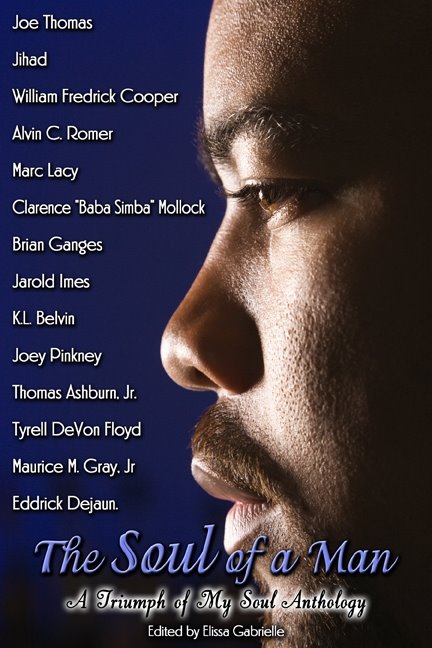
The Soul of a Man

The Soul of a Man

Hilarious Proof of How Bad U.S. Educational System Really Is

The Howard Beale Show

OUR NATIONAL DEBT

Soul Holiday

How to Brainwash a Nation

BG Street Playlist


Eventful and BG

Web Search

Red Pill or the Blue Pill

Deliberate Dumbing Down of Americans

How the Elite Control Politics

Chemical Dumbing Down of Americans

The Biggest Heist in History No one Wants to Mention

American's IQ. Not a Nation of Thinkers

Fluoride poisoning in food and water

Hijacking Children with “Pre-K Education” Bills

Get Mad and Wake Up!

Sanford and Son - Legal Eagle part 1 of 3